Marbella: a rich history
Automatically translated from Dutch. Read the original
When you think of Marbella, you will probably think of sun, sea and beach rather than the history of this cosmopolitan seaside resort on the Costa del Sol. Yet Marbella has an incredibly rich history that goes back to the time of the Phoenicians.
Table of contents
- How it all began
- King Ferdinand
- A fishing village on the Costa del Sol
- A royal visit
- The 1970s in Marbella
- A royal visit from Saudi Arabia
- The 1980s in Marbella
- The 1990s in Marbella
How it all began
The beach has always been a popular spot. In various places in and around Marbella you can see that people were living here centuries ago. Along the coast stand several watchtowers that were meant to protect the hinterland and the town itself from invaders. According to archaeologists, the Phoenicians were the very first inhabitants of the Costa del Sol, and they also lived on the site where Marbella now stands.
But the rich history of Marbella only really begins in the time of the Romans. They called the town Salduba, the town of salt. The remains of the Baños Romanos and the Villa Romano del Rio Verde can still be seen today. The Arabs took over the town in the sixth century AD and changed its name to Marbil-la. They built a fortress on the site of what is now the centre of Marbella. This was done to protect the population from attacks by the Christians. The Arabs ruled the town for nine centuries and, as in the rest of Andalusia, were eventually driven out in 1485.
King Ferdinand
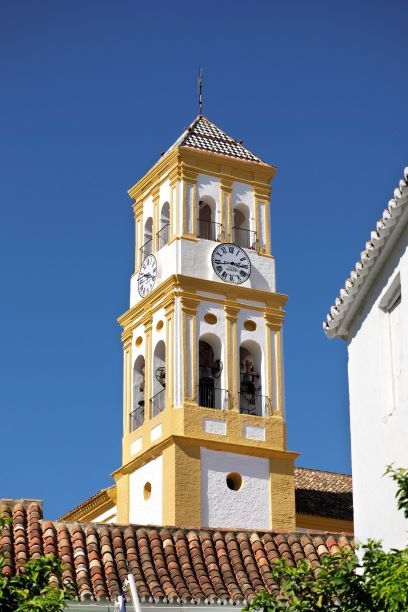
When King Ferdinand's troops arrived, they took possession of the town and destroyed many buildings and the fortress to make room for a square, the present-day Plaza de los Naranjos (Orange Square). The new inhabitants naturally also had to be protected against raids from the sea. It was therefore decided to build a new fortress, the Fuerte de San Luis. However, it did not offer sufficient protection, because during the war with the French (1808–1842) only the tower, sadly, remained standing.
A fishing village on the Costa del Sol
After that, peace finally came to Marbella, and the population slowly but surely began to grow. Originally, Marbella was always a fishing village. The inhabitants grew their vegetables and fruit on the neighbouring fields. In the nineteenth century, industrialisation got under way across Europe and a new era began for the whole Costa del Sol. Because the hinterland of Marbella is rich in minerals, a group of people decided to open mines there.
In 1826 four blast furnaces were built around Marbella, on the Finca la Concepción and on the site of what is now the El Angel district. Lago de las Tortugas was used for the cooling processes, and a railway line was laid to the town centre, where La Alameda (a public park) is now located. The blast furnaces were eventually closed in 1884, but the mining of iron ore in the Sierra Blanca continued until 1970.
A royal visit
When Prince Alfonso made a journey along the south coast of Spain in 1940, his Rolls Royce broke down near Marbella. While waiting for help, he fell for this charming fishing village. As a result, he decided to buy a finca (a Spanish farmhouse in the countryside) there. The prince's new home soon became a popular holiday destination for many other members of the aristocracy. So much so, in fact, that the finca became too small for all the guests and in 1954 the prince opened the town's first hotel: the Marbella Club Hotel, on the Golden Mile.
In the meantime, this luxury hotel has grown considerably and now has several restaurants and tennis courts. But it is still an important piece of the area's rich history. Many other hotels followed, giving tourism in Marbella a huge boost and making Marbella the favourite retreat of many film stars, politicians and, of course, the aristocracy.
The 1970s in Marbella
At the beginning of the seventies, Marbella had 30,000 inhabitants and still had a genuine village atmosphere. In summer, the aristocracy and the jet set came to enjoy the sun, the beach, golf and their exclusive clubs, while normal life simply carried on for the locals. At that time, Marbella was not a destination for the masses, but over the years more and more people came to spend their holidays here.
Royal visitors from Saudi Arabia
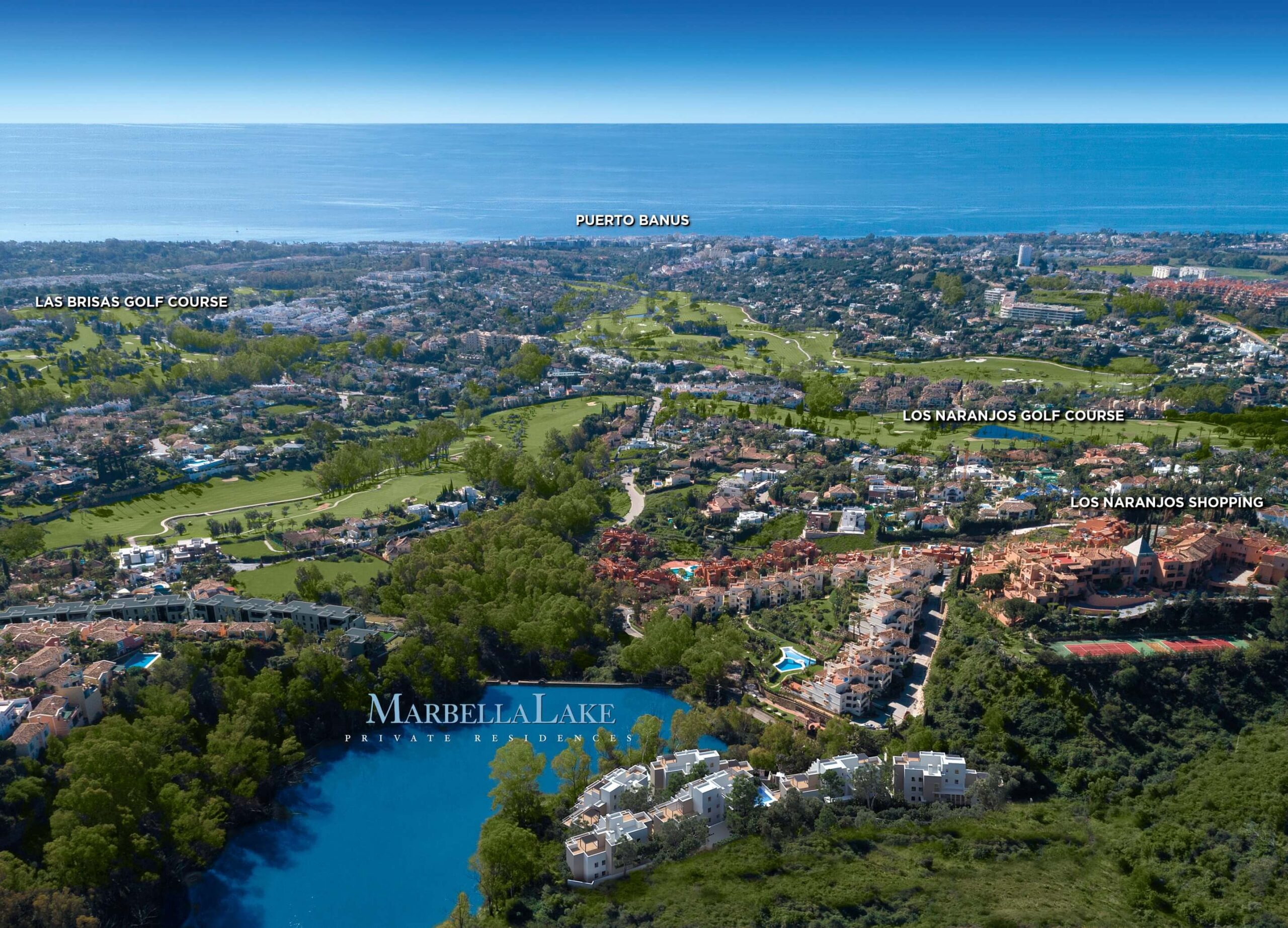
The former king of Saudi Arabia, Fahd bin Abdul Aziz al-Saud, also had a palace built on the Golden Mile. It was then that the people of Marbella truly saw what luxury meant. The palace employed hundreds of people all year round to make sure everything was perfectly in order. When the royal family came on holiday, the number of staff was increased considerably again. And the Marbellí benefited from this too. Not only were the salaries good, the tips were also a welcome bonus. During a visit by the king to Puerto Banús, he spent €350,000 there without batting an eyelid. After Fahd bin Abdul Aziz al-Saud died in 2005, the municipality declared 3 days of official mourning.
The 1980s in Marbella
From the eighties onwards, buying a second home in Marbella also became a possibility for many Europeans. Buying Various plots of farmland were covered with residential developments, naturally complete with a golf course and swimming pools. You will not see high-rise buildings in Marbella, because dictator Franco banned them in 1973. Whereas you do see tall buildings in Torremolinos and Benalmádena, the skyline of Marbella has remained largely intact.
The 1990s in Marbella
Whereas celebrities still came to the Costa del Sol in the 1970s and 80s, in the 1990s they increasingly gave it a miss. But what was behind that? Dubious mayors, Russians with tainted money and crime did Marbella no favours. This led to nicknames such as Costa del Crime or Costa Nostra. Now that the problems mentioned above have disappeared, people are coming back to this beautiful place. And new-build projects are springing up like mushrooms. In conclusion, the rich history continues!